Bands

There seems to be a lot of misinformation online about bands. Pet owners are attempting to use band information to find out more about their birds, which is a good thing. However, the reality is a lot more complicated. First I’m going to discuss the basics of bands and then I’ll address some of the common misconceptions.
18735716519_f906a3979a_b

What are bands?

Bands are like little ID bracelets. They can be metal or plastic and are located just below your bird’s ankle. There are several types of bands.
15825301161_85bf318e30_z

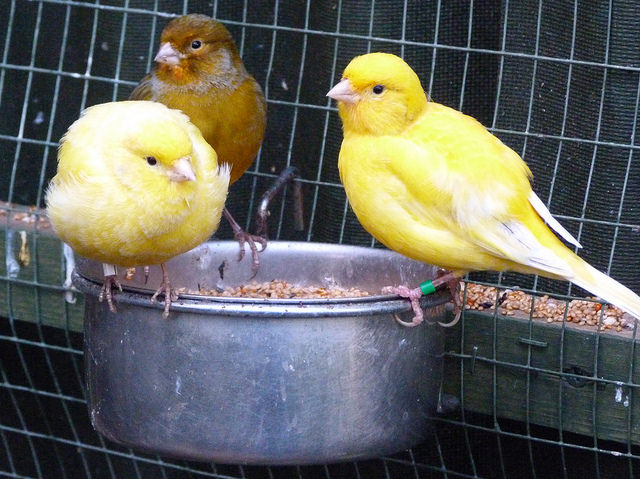
Plastic bands on canaries. Photo by steve pj2009.

Plastic Bands

Plastic bands are most commonly used to identify softbills. They allow aviculturists to quickly distinguish between different birds at a glance- particularly important if you don’t want to catch your birds every time you need to tell who is who. Sometimes birds will be banded several times on multiple legs. Breeders may put one band on each leg and then clip off a specific band when they discover the sex of a bird.
IMG_0484

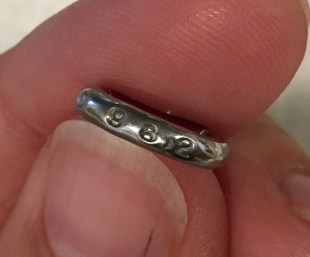
Open band removed from my mitred conure postmortem.

Quarantine Bands

Until 1992, the United States imported large quantities of wild caught birds. These birds were held at quarantine stations before being offered for public sale. All birds that went through quarantine were banded with open bands. If your bird does have a quarantine band you can look up where it was imported. All quarantine bands were open bands, as they were applied to adult birds.

Open Bands

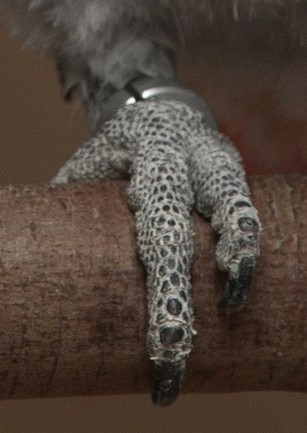
Open bands are metal and usually round (not flat). The only benefit of open bands is that they can be applied to adult birds.

8501094294_1ae20426d6_b

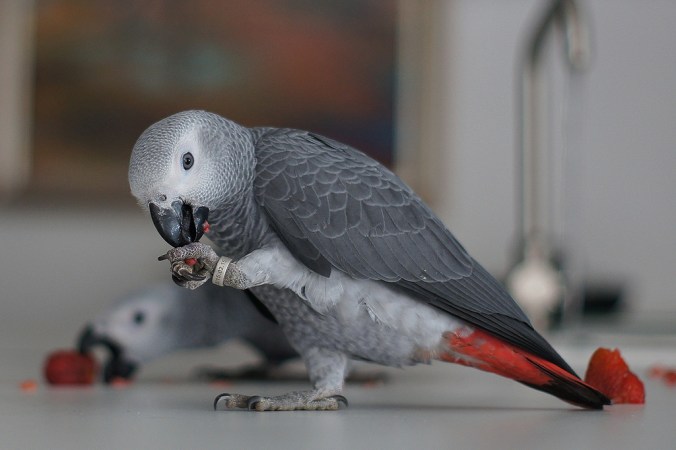
African grey chick wearing closed band. Photo by Papooga.

Closed Bands

Domestic-bred birds wear closed bands. These bands are flat and can be made of metal or plastic. They can only be applied during a brief window of time when the chicks are young. If banded too early, the bands will fall off. Too late and you won’t be able to fit them on the feet.

What information do bands carry?

Bands can tell you many things. The information given varies, but often the state, year, ID number and breeder are given. For instance, my cockatiel Melonie’s band says “CA LS 92 52.” This means she was bred in California (the state is often written sideways), her breeder’s initials or business abbreviation is L.S., she was hatched in 1992 and her ID # is 52. Breeders can pick and choose what they want on the bands. Some will not contain a year since the breeder may not use up all of his or her bands in one year.

Why is banding important?

Bands provide positive ID of a bird. If a bird is purchased and then later returned, the seller can verify that the returned bird is in fact the same one sold. They can be used as identification in case of theft (unless removed- microchipping is better). Closed bands are also fairly good proof that a bird was captive breed.

Are bands harmful?

Open bands can be dangerous because the small slit in them may catch on things, like the cage wire, especially if not closed enough. Most of the time bands are very safe. Hens usually do not attack babies with bands nor do birds mind them at all. Injuries can occur when a band catches on something, but most of the time this is the result of an unsafe cage. If your bird is banded be extra careful that no toys could catch your bird’s band.
band

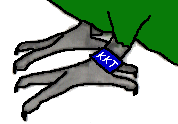
Feisty Feathers Bands

I try to band all the chicks I can. My cockatiels are banded with my National Cockatiel Society number (45F). Indian ringnecks and green cheeks are banded with my aviary name (FSTY).

Can I look up where my bird came from? Its age? Breeder?

Yes and no. Aside from specific clubs, which have their own bands and registries, there is no comprehensive banding system or database. Aviculturists who breed show animals like English budgies are far more likely to participate in such a system than someone who sells to the pet trade. Many breeders are going to want their own system in place, and may not use a club since their bands are often not very customizable.
open band

open band

Don’t assume the year is accurate.

The first year I started banding my own birds I got the year printed on my bands. Big mistake. Bands came in lots of 25 and I didn’t come close to using half of my bands that year. So I could either throw them away the following year or keep using them with the incorrect year. This is why most breeders don’t even bother with a year.

Don’t assume the state is accurate. Or the breeder. Or anything, really.

I recently acquired a pair of African greys from someone who was moving to China. This breeder was trying to unload all their stuff in prep for their move, and since I’d bought their last available pair they came with a lot of extra stuff: net, handfeeding formula, perches, and unused bands. Even though this was a California breeder, the state stamped on the bands was PA.

This brings me to another point- breeders can totally swap bands. I think the first time I bred ringnecks I ended up borrowing bands from a friend because I only needed a couple. When my grandfather died I got all of his old bands. I didn’t use them, but I certainly could have.

My point is that nothing about bands is certain. Pet owners have a tendency to give bands the same sort of authority as dog licenses or microchipping, when it’s really more like your neighbor borrowing a label maker so they can organize their closet. All you can know for certain is that closed bands were applied to babies before leaving the nest.

Banding is a way for breeders to distinguish between individual birds, not for people to be able to track down a breeder, know the age of their bird, etc. Some breeders make their banding system public, but most don’t because it’s an internal ID system. Many breeders don’t really care if their bands are “accurate” because again- it’s just to be able to tell the difference between similar birds. A few will have nice records and a formal system but many will not. It really depends on the breeder. So while you can use the information on a band to make a guess, there is no guarantee your guess is going to be accurate.

Here are some links if you do want to look up more information on bands:

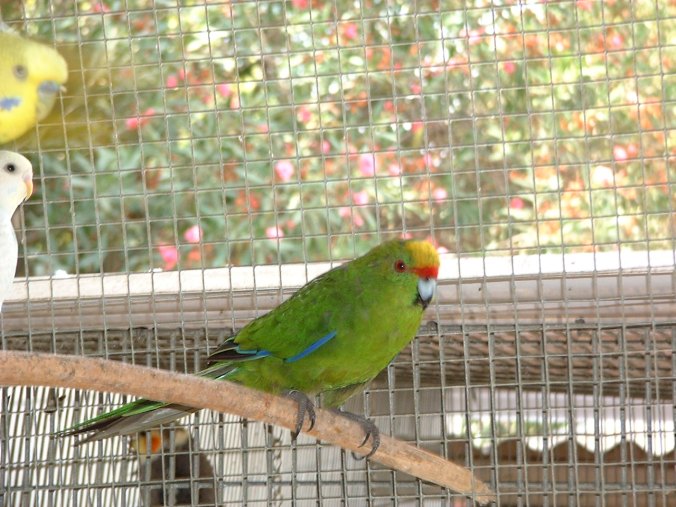
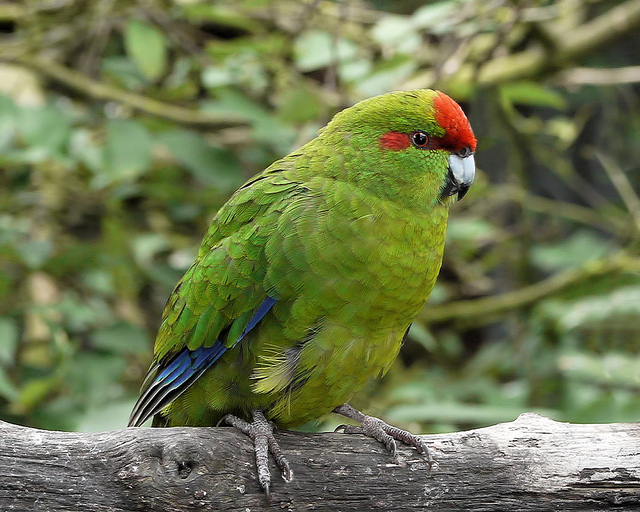
Red-fronted Kakariki

Cyanoramphus novazelandiae

kak16This information pertains to the red-fronted kakariki (C. novazelandiae) but most of it can also be used for yellow-fronts (C. auriceps).
In the Wild
More detailed ecology here.

Kakarikis are native to New Zealand. There are several species, most of which are endangered or extinct. New Zealand is a small group of islands southeast of Australia. Like most islands, it has very unique wildlife. Until man came, there were no mammals and birds evolved to fill in niches normally taken by mammals. Many of them became flightless and have no fear of predators. When man brought mammals like cats, weasels, and rats, most of the native birds were wiped out. Luckily the kakariki can fly. Still, they spend as much time on the ground as they do in the trees.

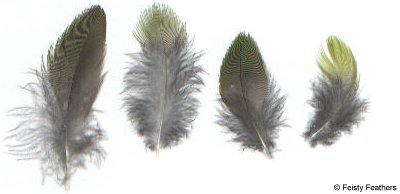
Kakarikis have long feet and toes which they use to scratch about on the ground like chickens. Their feathers are also elongated and fluffy to help protect them from the cold (New Zealand is right above Antarctica).

feather1

Kakariki feathers are elongated and fluffy.

feather2

Contrast with desert species A (cockatiel) and tropical species B (green-cheek conure).

Compare kakariki feathers with those from other species: the cockatiel (A) from the deserts of Australia and the green-cheek conure (B) from tropical Brazil. The down is concentrated near the skin and the tips are dense when compared with those of other species. Elongated feathers can be erected to trap heat near the body. Unfortunately these adaptations can work against them in captivity. Kaks can overheat easily.

Noise
Kaks have a very pleasant “wa wa wa” sound and males can be talented talkers.

Lifespan
15-20

Sexing
Kaks are dimorphic so there’s no need for DNA or surgical sexing as long as you know what to look for. Males are about 15 grams heavier than females, and have bigger heads and wider beaks. The females look very thin and dainty. Most males also seem to have a brighter shade of red than hens. Chicks can be sexed by the width of their beaks when their pinfeathers are just beginning to open. Use the following pictures as a guide to sexing your kaks.

mfkak1

male (left), female (right)

mfkak3

female (left), male (right)

Weaknesses
Kaks may be susceptible to aspergillosis. I’ve never had a single case of aspergillosis in any of my other species, yet it killed several of my adult kakarikis over the years. That said, I have yet to confirm this problem with other kak breeders and the problem stopped when I moved to Northern California. It could be that my first location just had a lot of spores locally and the kaks were more likely to pick them up and/or develop infections.

Baldness is common in kaks, particularly hens. Not all birds seem to have this problem. The feathers usually grow in during a molt and the bird will look perfect for a week or so, but then the feathers will drop out again. The cause may be genetic (kaks aren’t very common in the U.S. and many have been inbred) or overzealous preening on the part of the male. Kaks seem to drop feathers quite easily, so I can see how a little rough preening would knock quite a few out. My hens look really ratty in the breeding season.

Many of you have reported seizures or strange trances in your pet kaks, and have asked me if this is normal. This year was the first time I’d ever experienced it in my own flock. I placed my male yellow-fronted kak in a brown paper bag so that I could weigh him. When I took him out, he lay on the ground and appeared to be dying. I immediately rushed him to the vet, certain that he would be dead when we arrived. Instead he slowly started acting normal again- first he stood up and wobbled around, and soon he was hopping about the cage. By the time my vet saw him, he was acting normally.

My vet (an excellent avian vet, by the way) told me that some species go into weird trances or even have seizures when certain procedures are done. She said that it really freaks out the owners, but it is perfectly normal. I can’t remember all the species she mentioned, but she said Meyers parrots would go into seizures when their nails were trimmed. Odd and frightening, but they always snapped out of it eventually. Like I said, I’ve gotten numerous letters about seizures, trances and stumbling in kaks, so it appears that they may be one of the species that reacts like this.

yf_kak male

Yellow-fronted male

Husbandry
Kaks are very busy birds who want to be everywhere at once. They’re the only psittacine that makes me feel bad about clipping wings. Breeders should definitely be kept in an flight and pets should be let out as often as possible. Since kaks are so curious you should make triple-sure that there are no hazards in or around the cage. And be wary of escapes! I’ve seen my kaks perform somersaults in the air to avoid a net. Feed cups should be covered. These guys will flick food everywhere with their scratching behavior. Also, kaks do enjoy running around upside down on the ceiling so I’d advise at least part of the cage ceiling be wire.

kakchicks_june15l

Just try to catch us, Mom!

Breeding
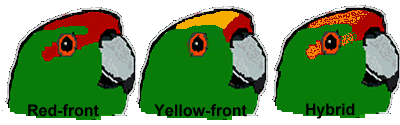
The first thing you need to make certain of is that your birds are not hybrids. Red-fronts only have red and it’s found on the crown, back past the eye, as a sort of stripe leading to eye and as a spot behind the eye. Yellow-crowns do not have the stripe or the spot near the eye, but have a small patch of red just above the cere and a yellow patch extending past over the eye. Hybrids look like yellow-crowns with a more orange color and sometimes a partial spot or stripe.

hybrid

Kaks can be bred similarly to cockatiels and Aussie parakeets. I’d advise only keeping one pair per aviary due to their curious nature. If offered multiple nestboxes they will start a clutch in one box and when the first clutch gets older the hen may start a new clutch in the second box while the male finishes raising the first. They are very prolific for their size (females about 55 grams and males about 75), laying 8-12 eggs. Often the hen cannot properly incubate such a large clutch and some may have to be taken out. Babies quickly begin to look like parents so banding is a good idea (banding is a good idea anyway). For a week or so after fledging their beaks will be beige but then will turn the typical silver tipped with black.

kakarikis03

They will kick everything out of their feed dispenser/dish. Every inch of their cage will be utilized. There is no dead space with kakarikis.

Diet
Regular psittacine diet. While most of my birds go right for the corn in their frozen veggies mix, my kaks eat the peas first. One of the most wonderful traits about kaks is that they are so curious. Not only does this make taming easy, but conversion to pellets as well. With most kaks, this is as simple as adding a bowl of pellets next to the seed dish for a day and then removing the seed the day after (just make sure they’re eating it if you switch cold turkey like this).

Personality/Behavior
Kaks were what inspired me to name my business Feisty Feathers. They’re a lot like big budgies- very animated, playful and chatty, but not very cuddle. I’ve handfed both budgies and kaks. It’s a joke. They want to be fed but they’re too hyper to sit still and feed. They want to over there or doing at that. It’s a miracle to get their crops completely full. Kaks make very entertaining pets if you can handle a bird that will get into everything.

Articles and images copyright © 1997-2011 by Karen Trinkaus unless otherwise noted and may not be reprinted or used in any way without the author’s permission.

Cockatiel

Nymphicus hollandicus

cockatiel-head-shot-2-1310680-1598x1198

In the Wild
Like budgies, cockatiels also hail from the deserts of Australia and breed very easily when given a constant supply of food. They are also extremely hardy, making them a perfect choice for beginners.

Noise
Tiels love to whistle, or at least the males do. Males are very cute when they’re whistling and showing off. They aren’t great talkers and anything they do say will be more of a whistled version. My male tiel Tootsie used to say “pretty bird” and another bird I knew named Jake could say “Jaker Bakers.” Tootsie actually picked this phrase up from him but would only say it once in a blue moon.

Lifespan
20-30 years

Sexing
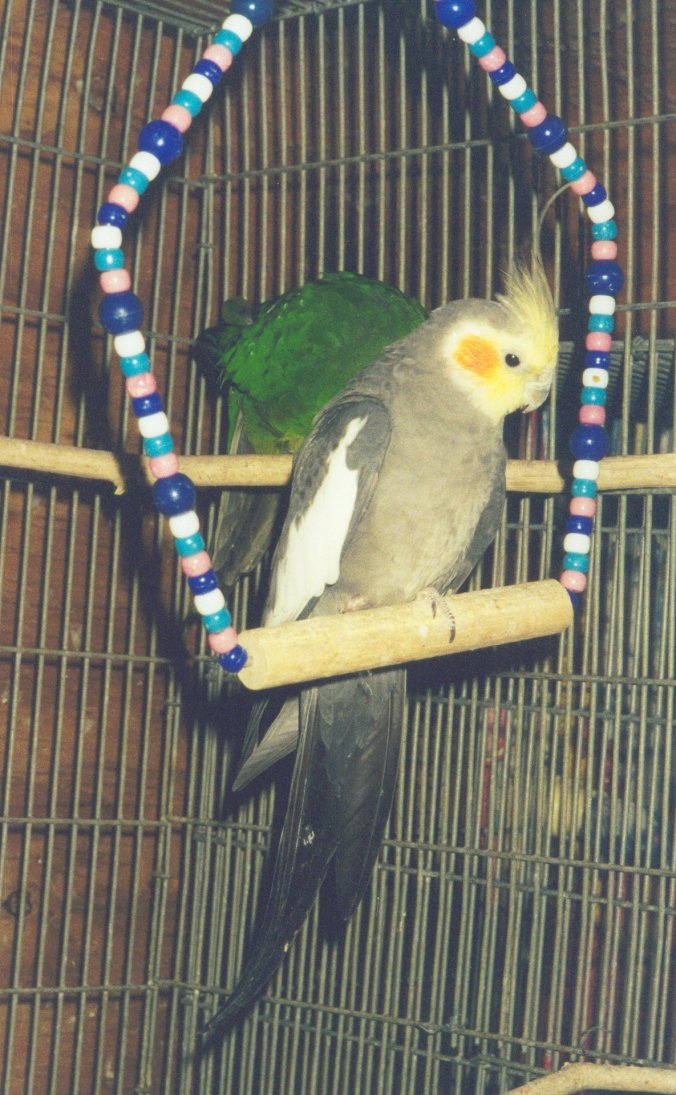
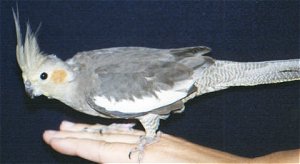
Tiels are dimorphic which makes sexing easy. Normal colored males have a yellow head. Hens look just like chicks- they are grey and retain the yellow bars on their wings and tail. Mutations often cannot be sexed visually but can easily be distinguished by behavior. Male cockatiels will sing and show off when presented with a mirror. Hens usually won’t show any interest in it at all. More help sexing various mutations, see Sexing Cockatiels Visually.

nymph-parakeets-741374_1920

Weaknesses
Cockatiels seem prone to giardia, a parasitic infection that causes itchy behavior and plucking. Other than this they are quite hardy.

Night Frights- Occasionally an owner will be woken up by the sound of their pet frantically thrashing about the cage. Odd noises, movement or lights may set off such a fright (like if you try to sneak past the bird’s cage at night without turning on the lights). Some frights have no apparent cause. Frights can be dangerous because the bird flaps about, refusing to calm down. Thrashing birds can easily break a wing, leg or bloodfeather. Use flour to clot the blood if a feather is bleeding.

If your tiel is prone to frights there are several things you can do. First, try to find out the cause and eliminate it. Is the bird next to a window? Could passing car headlights be the cause? Try covering the cage or leaving it uncovered. Try placing a night light in the room. If nothing seems to help, it would be beneficial to have a separate cage for the bird to sleep in, one without lots of toys and perches for it to knock into.

One thing you should consider for your own health is that cockatiels are very powdery birds. I wouldn’t recommend them to anyone who has asthma or another respiratory condition. If you still want a tiel but have allergies/asthma, invest in a good air filter.

Husbandry
Cockatiels aren’t as active as kaks or budgies so they don’t require as much room. Still, the cage should always be as large as possible. Pets will require a lot of time out with their owners. Pairs will breed in modest-sized cages.

Breeding
See Breeding Cockatiels.

Diet
Regular psittacine diet. Veggies and leafy greens are favorites.

linus2

Personality/Behavior
The cockatiel personality can be summed up in one word: sweet. The cool thing about cockatiels is you get a bird with all the good qualities of a cockatoo or larger parrot without all the vices. Cockatiels are very cuddly, but don’t get so attached to their owner that they develop bad habits like cockatoos.

A tiel’s favorite place to be is on its owner’s shoulder. Like most birds, they love spending time with the family and will call out if separated. Tiels have a very specific call for “Where did you go? Come back!” and will use it when you walk out of the room. Some owners find this call very irritating, and there are a few things you can do to prevent the bird from calling incessantly. First, keep the bird’s main cage in the living room or other actively-visited room. Second, keep the cage well-stocked with toys so that the bird has something to do when you leave. Third, put the bird on a schedule. Like most of us, birds like knowing what to expect. If you come home every day at around the same time, let the bird out, then put it away while you make dinner, the bird will learn that there are certain times it will be out and certain times it will be caged while people are still around. Multiple birds can also help keep each other company while you are otherwise engaged.

Aside from calling and the typical attitude that comes with puberty, cockatiels don’t have many behavior problems.

© 1997-2011 by Karen Trinkaus May not be reprinted or used in any way without the author’s permission.

Kakariki Network

alicia

The Kakariki Network is my personal attempt to create a database of kakariki breeders and other resources. Breeders are listed free of charge. If you breed kakarikis but are not on the list please send me your information so it can be posted. Keep in mind that this is simply a database of breeders- I cannot vouch for the quality of birds. Please use the same caution you normally would when shopping for new birds.

Please note that many breeders operate out of their homes, and may withhold certain information for security and privacy reasons.

USA Breeders

Non USA Breeders

Kak Information

Kakarikis in the Wild

This was originally a report I did for an Avian Science class at UC Davis.

Kakarikis are strange little parakeets that are native to New Zealand. There are six species of kakariki (two are extinct) and several subspecies (Forshaw, 1977). This paper will focus mainly on the natural history and ecology of the red-fronted kakariki, Cyanoramphus novaezelandiae, although much of the information regarding the red-fronted can be applied to the other species as well. I chose to research this species because out of all the psittacines that I breed, kakarikis have caused me the most trouble. My hen is an exceptional layer, but that is about all. I have watched countless chicks whither and die whether left to their mother, hand-raised by myself, or fostered by my cockatiels who are excellent parents. The abnormally high death rate of chicks, as well the delightful pet qualities of those that do survive to fledging, has captured my interest in these birds. I hope to one day be able to study them myself in their native country.

As island dwellers, kakarikis have had to cope with habitat loss and the introduction of foreign species. Of the four species still surviving, C. unicolor (Antipodes) and C. malherbi (orange-fronted) are the rarest. Many attempts have been made to re-establish species through captive breeding. Sometimes this method is successful, but when it is not, scientists often suspect feral cats to be the reason (MacMillan, 1990). Hybridization among the various species remains a major problem, although some scientists speculate that the orange-front is a only a color mutation of the yellow-crown (C. auriceps) and crosses between these two should be dismissed (Taylor et al. 1986). Update: Scientists have since verified that the orange-fronted kak is a mutation of the yellow-front. However, this mutation is still absent in American aviculture so birds displaying orange are actually red and yellow-front hybrids.

hybrid

Red-fronted kakarikis are mostly green. Their flight feathers are blue but get dark grey towards the tip and they have a red crown, forehead, and band behind the eye. A red spot is located on both sides below the rump. The eyes are orange, the beak is silver with a black tip, and the cere is brown. The feet are zygodactyl with very long toes and nails. They are twenty-six to twenty-eight centimeters long (Wilson, 1990). Most captive breeders find their birds to weigh around 70 grams for males and 55 grams for females (Vriends, 1992). A study of weights of birds on Aorangi Island indicated that the wild population may be much heavier. This study found that the average weight was 82.1 grams for males and 67.9 for females (Sagar, 1988). This may be due to variations in diet between captive and wild birds.

This species is dimorphic, but people unfamiliar with it may find it difficult to distinguish the sexes. Males are much heavier than females, and have a larger body size. Males also have much wider beaks and heads. Once one is familiar with these differences, the birds become quite easy to sex, even unfeathered chicks.

Kakarikis have several peculiar behaviors. They scratch around on the ground like chickens when searching for food (Hyde, 1995). One study found that kakarikis will eat manuka and kanuka leaves to combat parasites (Greene, 1989). Both plants contain a natural insecticide called leptospermone. Birds will also spread juices from these plants over their feathers.

5225410158_ddd7f58356_z

Wild kakariki at Nga Manu Reserve. Photograph by Sid Mosdell.

I have noticed several distinct characteristics and behaviors in my own birds which were not mentioned in any of the articles I found. These observations are completely my own, and should be researched to assess validity. Females are more common than males (other breeders I have spoken with have also noticed this). They are very prone to aspergillosis infections, perhaps because the cold temperatures of New Zealand do not allow fungi to grow as well. They are very agile in flight and can take off backwards. Rather than turning around to see what is behind them, they flip their head back and upon seeing something of interest they will take off and flip over in flight. Their feathers are very long. Tropical and desert psittacines usually have feathers on their body and head which are rather rounded. Kakarikis’ feathers are often thinner and longer, most likely to help keep warm. Kakarikis must bathe daily to keep feathers in good condition. Their feathers are very sensitive when in the pin-feather stage. Many pet birds like to have their pin-feathers opened when ready by their owner. Kakariki feathers are damaged by this activity. They become ripped, cut, and jagged along the shaft. This happens the worst in the flight and tail feathers.

The diet of the red-fronted kakariki is typical of most psittacines: plants, fruit, seed, and occasionally insects. Bellingham (1987) found that they ate “ngaio and taupata fruit, pohutukawa flowers, flax seed and grass seed” and that “fruit and seed together formed over two-thirds of the diet.” The red-fronted is commonly found foraging on islands where rats were not introduced. The islands where it forages have “a wide range of vegetation – grassland, coastal scrub, and coastal forest (Bellingham, 1987).”

Red-fronted kakarikis are prolific in both the wild and in captivity. In the wild, Bellingham (1987) observed them nesting “under the roots of pohutukawa trees” that grew on cliffs near the sea. Kakarikis can make nests in whatever is available to them. They prefer nesting in trees, but when none are accessible they will nest among roots in cliff crevices, on the ground, even inside burrows. Forshaw (1977) wrote that kakarikis are very adaptable to their habitat. They can exist on any island that is free of introduced predators. On Macquarie Island, which has no trees, they are “completely terrestrial.” This willingness to nest virtually anywhere has no doubt helped the kakariki to survive on islands were other birds will not. No real courtship displays have been observed.

The number of eggs laid is very high for such a small bird. This number is the highest in the red-fronted kakariki. Clutches of five to nine eggs are not uncommon. Captive birds, including my own, have been known to lay twelve. Unfortunately, hens with such a large number of eggs often have trouble incubating them all. Only the hens incubate. The incubation period is 20 days (Vriends, 1992). The eggs are similar in size to those of cockatiels, only more rounded. The chicks hatch “covered in white down, but this changes to gray in a few days (Vriends, 1992).”

I could find no information regarding the number of young fledged in the wild, however, captive numbers vary greatly. While kakarikis are capable of rearing large numbers of chicks, “occasionally a high death rate of the young will occur without any apparent cause (Vriends, 1992).” I have personally had this problem myself, but I have always hoped that it was due to a lethal gene factor caused by a limited supply of birds, and not necessarily a trait of this species. Research should be done to see if this problem also occurs in the wild, and what causes it. The young are fed by the parents for a few weeks after fledging.

This species does not migrate, but does occasionally fly to nearby islands in search of food (Sagar, 1988). Red-fronted kakarikis were once common on the mainland in forested areas, but their numbers have been severely reduced. They now remain on Little Barrier, Antipodes, Auckland, New Caledonia, and a few other islands (Forshaw, 1977).

Red-fronted kakarikis and other Cyanoramphus parakeets are curious little psittacines which would greatly benefit from more research. Four of the six species have managed to survive despite habitat loss and the introduction of mammals onto the various islands. Had they been less adaptive, or had they evolved themselves into a very specialized niche like many other island species have done (ie. the kakapo), they might not have endured until today. It is hoped that through research, captive breeding, and restoration of island habitats that this genus will continue to exist as part of New Zealand’s unique wildlife.

Literature CitedBellingham, Mark. 1987. Red-crowned parakeet on Burgess Island. Notornis 34: 234-236.

Forshaw, J.M. Parrots of the World. T.F.H. Publications: Neptune, NJ. 1977.

Greene, Terry. 1989. Antiparasitic behavior in New Zealand parakeets. Notornis 36: 322-323.

Hyde, Graeme. 1995. The kakariki parakeet. Bird Breeder magazine. Fancy Publications Inc. Vol. 67: 16-24.

MacMillan, B.W.H. 1990. Attempts to re-establish wekas, brown kiwis and red-crowned parakeets in the Waitakere ranges. Notornis 37: 45-51.

Sagar, P.M. 1988. Some characteristics of red-crowned parakeets on the Poor Knights Islands. Notornis 35: 1-8.

Taylor, R.H., E.G. Heatherbell and E.M. Heatherbell. 1986. The orange-fronted parakeet (Cyanoramphus malherbi) is a color morph of the yellow-crowned parakeet (C. auriceps). Notornis 33: 17-22.
Vriends, Mathew M. The New Australian Parakeet Handbook. Barron’s Educational Series: Hauppauge, NY. 1992.

Wilson, Kevin. A Guide to Australian Long and Broad-tailed Parrots and New Zealand Kakarikis. Australian Birdkeeper: South Tweed Heads, Australia. 1990.

© 1999 Karen Trinkaus  May not be reproduced without author permission. Photograph credit Sid Mosdell.

Should I buy a Second Bird?

The last time I was at a bird club meeting the speaker was the editor of Bird Talk magazine. She brought up some of the frequently asked questions they receive. As bird club members, we all kind of chuckled at these because they were common knowledge to us. One of the questions they routinely get is “Should I buy a second bird?” She said the fact that the person was even asking the question indicated that the answer was “no.” Most people nodded in agreement at this statement. I beg to differ.

I receive this question a lot too, but most people don’t ask it out of some nagging doubt it won’t work or they shouldn’t do it. In many cases, they want another bird, but are unsure how their first will react. Will the two get along? Will their first bird lose its pet qualities? How soon can they be introduced? What species would be most compatible? To me their question shows that they know enough about birds not to jump into something blindly. They want to educate themselves first. Most people obtain their first bird without doing any research. They learn through trial and error, not really the best way for the pet or the owner, but if they’re trying to rectify the situation the second time around I can’t fault them. There’s nothing wrong with making an informed decision.

rainbow-lorikeet-638413_1920

Benefits of Keeping a Flock

I have a personal philosophy regarding this issue – I never keep birds singly. A bird that has its own cage is still kept near others and allowed play time with them. The only time I completely isolate a bird is if it must be kept in a hospital cage due to health problems. This does not mean that I think every owner should run out and buy more birds. Many people are happy with just a single pet. This article is for those of you who are contemplating buying another bird, but haven’t quite made up your mind yet.

I believe it is psychologically beneficial for birds to be kept in a flock. My adopted mitred conure responded extremely well when kept around my flock. He no longer tries to assault other birds. Many people don’t properly socialize their birds. One of my requirements of socialization is that bird know how to be a bird. A handfed reared in isolation with no avian contact may have identity problems later, particularly if its owner expects it to act like a little human. Birds are not humans and never will be. We both share many behaviors but have different motivations. Understanding your bird’s behavior is the key to getting along with it. I think new owners tend to attribute human motivations to their bird’s behavior or simply treat them as if they have no emotions at all. Both views will lead to problems.

When you allow birds to interact with one another you give them a chance to communicate in their own language and to be themselves. As an aside: One of my pet peeves is when people ask me about teaching their birds to talk or want to know if my birds talk. Yes they talk- they speak bird! You’ll get along much better with your animals if you learn to communicate with them. I’ll have you know I’m fluent in “duck” and “chicken.” I’ve made friends with wild ducks using this skill. Don’t ask me how to teach your birds to talk, ask me how you can learn to speak “bird.”

Not everyone can give their bird the attention it requires. Many people will buy their pet a mirror, thinking this will help keep it company. This is worse than keeping a bird isolated. If you can’t give your bird the attention it needs, give it up or buy a second.

I also believe that owners learn more about bird behavior when observing more than one interacting. Owners of one bird only see that single bird’s behavior. They have no point of reference and mistakenly judge their behavior as “odd.” When you see birds interact with one another it makes more sense.

I also cannot overstate how beneficial it is for birds to have another bird, even a different species, around during the day when you’re not home. Parrots are not meant to be kept in isolation.

Will my first bird lose its pet qualities?

No. If your bird is tame and lovable it should stay that way. I have never seen a bird become unfriendly just because it had a new friend. I think this myth has been propagated by owners whose birds hit puberty the same time as a new bird is purchased. Behavior changes associated with puberty have nothing to do with the introduction of a new bird.

DSCN4087

This guy was handfed and socialized by me. He’s an aviary bird and I haven’t handled him on a regular basis for ten years. Still tame.

Let’s say you buy a new cockatiel. You have it for a few months. It’s so sweet and wonderful you just have to get another one. Your first bird is probably around six months to a year old when you decide to introduce another. Guess what time puberty hits? That’s right, around 6-12 months. The new bird is unjustly blamed for problems that would have occurred anyway.

What species are the most compatible?

This is more of a concern if they are to be sharing a cage. Given a large enough cage, you can probably keep any birds of similar size together. I keep conures, budgies, kakarikis, tiels and ringnecks together, but then I have walk-in aviaries. Territorial issues are less of a problem when you are not breeding.

If the cage is smaller you’ll need the species to be more alike. Tiels and budgies have similar care requirements but they don’t get along well in confined spaces, especially if there are only one of each (or one tiel and numerous budgies). Tiels are mellow birds; budgies are pesky and very active. The constant movement alone can drive a tiel nuts in a small cage. Even if it doesn’t, the budgies are likely to harass the tiel endlessly.

When species are very different (in size or behavior) you need to give each their own cage. I would not keep any of the medium or large parrots together in a standard pet cage. You’d need a large flight to do that.

Supervised play is fine with most similar-sized birds, as long as you know how to read body language and prevent problems.

How soon can they be introduced?

Quarantine all new birds for at least 30 days. By quarantine I mean keep them in another room with NO contact with your current birds. You don’t want to risk bringing in any diseases. Feed the new bird last and change clothes/wash hands before handling your other birds again. I also recommend a vet check and bloodwork if you can afford it. You can see a veterinarian for disease testing or submit it yourself.

amazon&conure

How do I introduce them?

Some species can be thrown in together with few problems. Budgies and tiels usually fall into this category. Heck, budgies typically welcome new birds! However, birds that have established territory- especially perceived breeding territory- may have a problem with a new bird suddenly sharing it. In this case it is best to start out with separate cages, in view of each other, and supervised play time outside of the cages. How soon the two get along will vary. If you see any fighting take things back a step.

How do I keep them from breeding?

Don’t buy the same species or the opposite sex, and don’t give them a nestbox.

© 1997-2002 by Karen Trinkaus and may not be reprinted or used in any way without the author’s permission.

Budgie Growth Guide

Please note that this guide is for standard budgies, not English.

This slideshow requires JavaScript.

Banding is done on day 7.

Here is a nice video on budgie growth:

© 1997-2016 by Karen Trinkaus. May not be reprinted or used in any way without the author’s permission.

Sexing Cockatiels Visually

With so many mutations, it can be difficult to know what to look for when trying to sex your cockatiel. The following chart tells you what to look for with each color mutation.

Don’t know your bird’s mutation?

Some visual sexing rules:

  • Applies only to birds that have gone through their first molt.
  • Crest length is not accurate.
  • Cheek patch intensity is not accurate.
  • Mutations that cannot be sexed visually should be sexed by behavior


Mutation Male Female
Normal, Cinnamon, Fawn Yellow head
No barring on tail.tiel_lefty 
Looks exactly like juvenile
Head may have a few flecks of yellow
Tail barring remains.melonie3
Pearl Pearls lost or diminished after first molt. Eventually all will be lost, making the bird look like a normal male (see above). Please note that pearl pied males can retain their pearl markings. Pearls retained throughout entire life.

DSCN4081

Whiteface White head
No barring on tail.ralphie1
Looks exactly like juvenile.
Head may have a few flecks of white.
Tail barring remains.tiel03_wfsplitpied
Yellowface Yellow head
No barring on tail
Looks exactly like juvenile
Head may have a few flecks of yellow
Tail barring remains

The following mutations can be sexed by DNA or behavior:

Pied Pied breaks all the rules. Save yourself the stress and just DNA.
Lutino Really difficult unless you know what you’re doing. Females retain barring, but they can be hard to see. If the bird is lutino pied you’re not going to see bars.
Albino Cannot be visually sexed.

© 1997-2016 by Karen Trinkaus. May not be reprinted or used in any way without the author’s permission.

Cockatiel Color Mutations

See also: Sexing Cockatiels Visually

Most parrots have two pigments that produce color. Melanin is responsible for darker colors, like blue. In cockatiels it shows up as grey. Carotenoids are responsible for orange/yellow/red hues. (Click here to learn more about bird pigmentation.)

Color mutations occur when a gene for producing a specific pigment is turned off, cranks up production, or causes a change in the way pigments are distributed. In the wild, mutations can be deadly if they cause a particular bird to stand out more to predators. However, if they are advantageous the bird will survive and pass along its genes for that mutation. In captivity, breeders will try to isolate any new mutations so that more birds with that color can be produced. Rare color mutations typically cost more. Some colors, although not rare, are considered highly attractive and that will also drive up their price.

Normal (no mutation)

Body is grey with white on wings and orange cheek patches. Hens and juveniles have yellow barring on the tail. Hens may also have slight yellow flecking on head. Males lose tail barring and get a yellow head.

melonie3

Normal female

DSCN4071 (2)

Normal male

Pearl

Body is covered with a unique pattern of spots. Females retain pearls throughout their lives. Males lose most pearls with their first molt. Eventually they will lose all of them until they look just like normals.

DSCN4081

Adult female pearl

Lutino

Birds produce no melanin. This means only their orange/yellow pigmentation shows. Lutinos appear yellow-white and still retain their orange cheek patch. They have red eyes.

DSCN4058 (2)

Lutino is always a popular color.

Whiteface

The opposite of lutino, these birds produce no carotenoids. They retain their grey but have no yellow or orange hues. In adult males, the face will be white instead of yellow. Females will have a grey face.

DSCN4067 (2)

Adult male whiteface (left), lutino in the back.

Albino

Albino is actually a combination of whiteface and lutino. These birds produce no pigment and are completely white. Due to the lack of melanin they have red eyes.

Albino1

Pied

Pied birds have patches where pigmentation is missing. Where the patches occur is highly variable and no two pieds are alike.


tiel_cinpearlpied2

This gorgeous hen is pearl, pied and cinnamon. Her pied patches are also symmetrical, which I find particularly nice in pieds.

Birds that carry only a single copy of the pied gene will usually have stray white or yellow feathers in certain locations–the nape is very common, but it can also be a single lighter toenail or wing feathers.

tiel03_wfsplitpied

Whiteface male, split for pied (white patch on nape).

Yellowface

These birds have yellow cheek patches instead of orange.

SilverPearl_SilverYellowcheek

Regular cheek patch on left, yellowface on the right. These birds are also silver and pearl.

Cinnamon/Fallow

These are two different mutations. Both cause the normal grey to have a muted, softer brownish tinge. Fallow tends to be slightly more of a yellow brown, and the eyes can have a reddish tinge (though not completely). I haven’t worked with fallow so I only have pictures of cinnamon.

DSCN4075

Both adult these males are whiteface. The cinnamon is on the left. Note how it is softer grey but also has a brownish hue.

Silver

Silver is caused by multiple genes and affects the grey coloration. How much the grey changes depends on the genetic makeup of the bird. It basically causes a lightening of the grey, but without the brownish tones of cinnamon and fallow.

Silvers

Notice how the grey is muted. This bird is silver, pearl, and yellowface.

Here is another source if you’d like to read more.

© 1997-2016 by Karen Trinkaus. May not be reprinted or used in any way without the author’s permission. Yellowface, silver, and albino images reprinted with permission from Pam Bowman.

Cockatiel Growth Guide


This slideshow requires JavaScript.

Day 1
Chick doesn’t do much. It can’t hold it’s head up. Not a very strong feeding response. Down moist.

Day 2
Has figured out where the food comes from. Stronger response. Can sit and hold head up fairly well. Down dry and fluffy.

Day 3
Eyes may just begin to open.

Day 4
Eyes opening.

Day 5
Eyes opening.

Day 6
Feather tracts should be getting more apparent. Chick begins to do defense display (hissing and swaying) when woken up or when the container is moved.

Day 7
Band baby. Feather tracts beginning to bud with tiny pinfeathers

Week 2 (Days 8 – 14)
Pinfeathers grow in. Chicks get better balance, start stretching, standing up and flapping their wings.

Week 3 (Days 15 – 21)
Pinfeathers open, tail and primaries (flight feathers) first. Chicks flap their wings and preen a lot. They also begin picking at things around them (you may want to start providing food items to play with now).

Week 4 (Days 22 – 28)
Weaning is well on its way. Chicks will begin flying all over the place. It’s usually good to wait until they have fairly good control at flying before clipping the wings.

© 1997-2016 by Karen Trinkaus. May not be reprinted or used in any way without the author’s permission.